Commercial
Warehouse and Industrial Cleaning in Mesa, Phoenix and the West Valley
We clean the part of an industrial building that people live in. The front office, the break room, the restrooms, the locker area, the conference room where the customer sits, the entry where the driver waits for paperwork.
Day Cleaning Solutions keeps those spaces clean on a schedule for warehouses, distribution centers, light manufacturing shops and contractor yards across Mesa, Phoenix and the West Valley, and we are clear from the first call about where our work stops.
This page is for the warehouse manager, operations lead or owner who has watched a cleaning vendor treat a warehouse like an office and give up after a month. Industrial buildings are dustier, busier and harder to schedule, and the agreement has to be written for that.
What We Clean in a Warehouse, and What We Leave to Your Crew
Being specific here saves everyone a bad quote. Our warehouse scope covers the occupied, non-production side of the building:
- Front office and reception. Desks wiped where staff allow, floors vacuumed or mopped, glass, trash and recycling, the counter where drivers sign in.
- Break rooms and kitchens. Detailed below, because this is where the complaints come from.
- Restrooms and locker rooms. Cleaned, disinfected, restocked from your supply, floors scrubbed.
- Conference rooms and training rooms. Tables, chairs, whiteboards, floors.
- Entries, vestibules and hallways. Mats, thresholds, door glass, handrails, the path from the door to the office.
- Shipping and receiving offices. The dispatch desk, the driver window, the small office off the dock where the paperwork happens.
- Mezzanine offices and supervisor stations. Where they are reached by a normal stair and separated from the production floor.
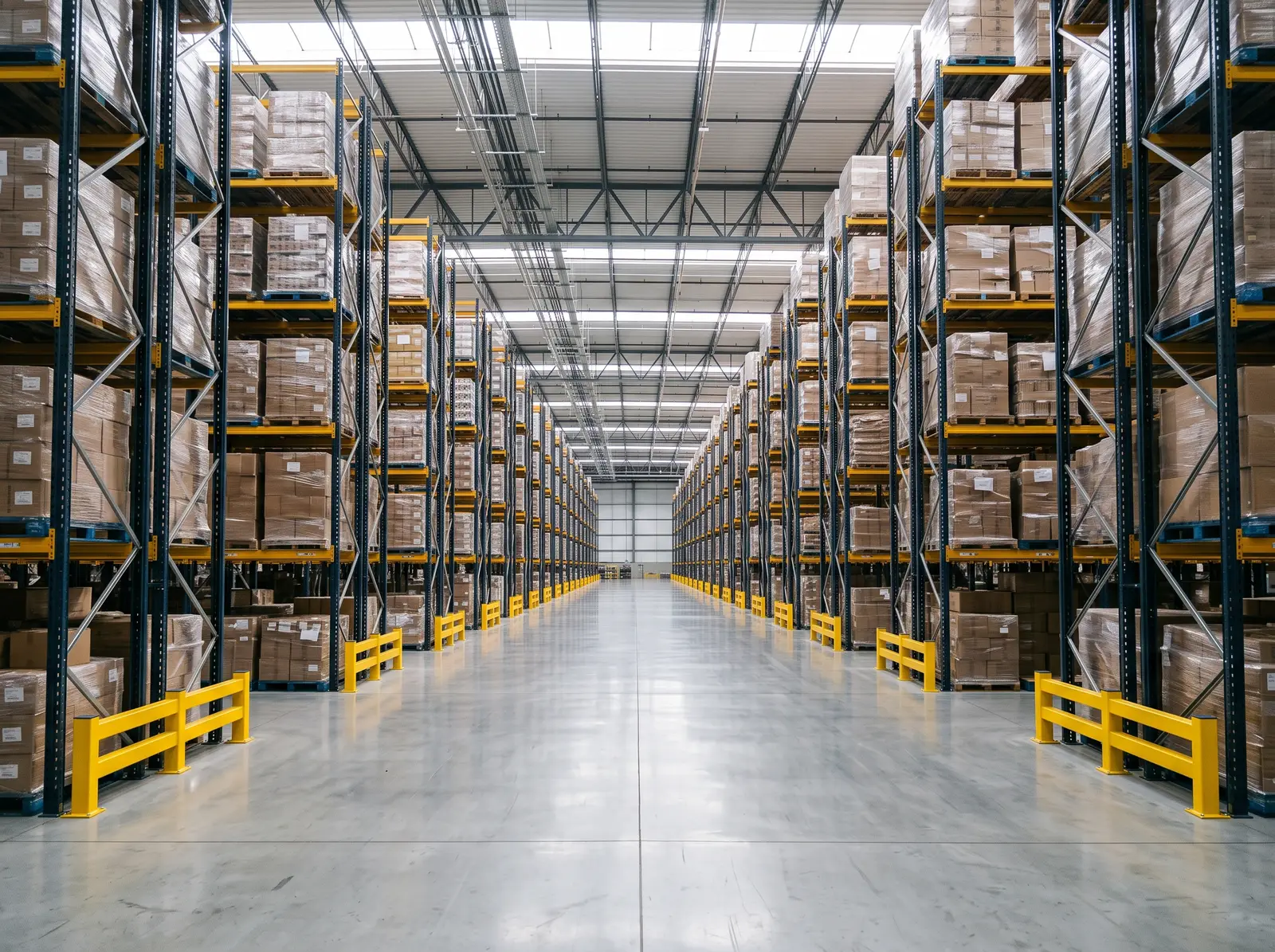
What we do not do: we do not clean the racking aisles, forklift lanes or active production floor, we do not touch machinery, and we do not handle spills, chemicals or anything that needs a spill response. That work belongs with your own crew and your safety program. If a cleaning company tells you they will mop the shop floor between shifts with the forklifts running, ask them how.
Break Rooms That Get Used Hard
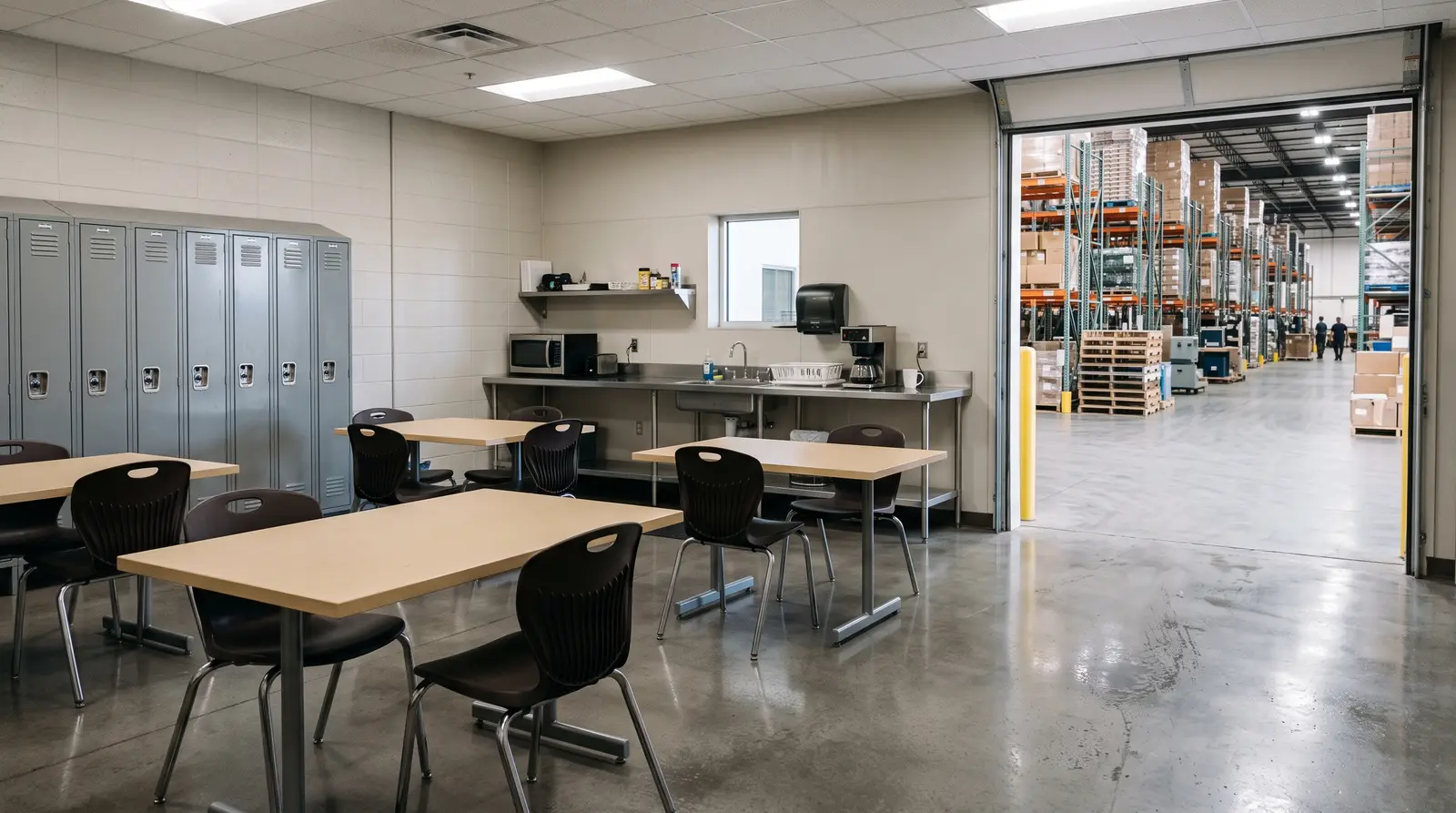
A warehouse break room is not an office break room. It feeds two or three shifts a day, the microwave runs constantly, the fridge is a shared resource with rules nobody follows, and the tables see grease, sauce and drink rings from breakfast through the overnight lunch. The floor takes boot traffic and whatever was on the dock.
We clean it like the kitchen it is. Tables and chairs wiped, counters and sinks scrubbed, the microwave cleaned inside and out, appliance exteriors and handles wiped, the fridge exterior cleaned and the interior wiped on the schedule you set for it. Vending machine fronts, the coffee station and the water cooler get done. The floor gets swept and mopped with a product that cuts grease. Trash and recycling go out every visit, and the can gets washed when it needs it. If your break room has a locker bank, the locker fronts, benches and floor are part of the same pass.
Warehouse Offices, Front Entries and Restrooms
The office side of a warehouse is where your customers, your auditors and your new hires form an opinion of the operation. The front entry takes in dust from the parking lot and the yard on every boot. The restrooms carry the whole workforce. The offices collect the same paper dust and fingerprints any office does, with a layer of warehouse grit on top.
Entries get mats vacuumed and shaken out, thresholds and door tracks cleaned, glass wiped inside and out at ground level, and the floor mopped as far in as the grit travels. Restrooms get toilets, urinals, sinks, partitions and floors cleaned and disinfected, mirrors and dispensers wiped, and paper, soap and towels restocked from your stock; drains and fixture bases get scrubbed for the hard water scale that builds fast anywhere in the Valley. Offices get desks wiped where the occupant allows, keyboards and phones left alone unless asked, floors vacuumed, trash out, and the high-touch points, from door handles to the time clock, wiped on every visit.
Dust From Open Dock Doors and the Shop Floor Edge
Every warehouse in the Phoenix metro fights the same enemy, and it comes in through the dock. Roll-up doors open all day, the yard is dust and decomposed granite, and the wind carries it in. During monsoon season a haboob turns that into a film over every surface in the building by morning, and the office side of the building takes it just as hard as the production side.
We plan for it instead of pretending it will not happen. Dust mopping and damp mopping on the office side happen more often than they would in a sealed building. Ledges, window sills, the tops of filing cabinets and the top of every partition get dusted on a rotation. The transition zone, the hallway or vestibule between the shop floor and the offices, gets extra attention because it is where the grit gets tracked from one side to the other. After a big dust storm we can add a pass rather than waiting for the next scheduled night. Ceiling vents, light fixtures and high ledges in the office areas go on a periodic high-dusting rotation written into the agreement.
We stop at the edge of the shop floor. The concrete on the production side, the dock plates and the area under the racks are your crew's responsibility and your equipment's.
Schedules for a Distribution Center That Never Fully Stops
A distribution operation may run two shifts, three shifts, or a skeleton crew overnight, and the cleaning schedule has to fit into the seams. What we set up most often:
- Nightly during the quietest shift. The full office-side scope, done while the break room and restrooms are least used, with the crew working around the shift on duty.
- Weekly or several times a week. For a smaller shop or contractor yard with a single day shift, one or more visits after close.
- Split coverage. A nightly pass plus a midday restroom and break room check for a large workforce.
- Periodic work. Floor scrubbing in the office areas, high dusting, break room deep cleans, window washing on the ground floor.
Access is worked out at the walk-through: which door the crew uses, where they park, how the alarm is handled, which areas are off limits, and who on your night shift knows we are in the building. The crew signs out the same way every visit and sends a text or email when the office side is done. Calls and bookings are taken seven days a week, day or night, because a warehouse does not keep office hours and neither do we.
Why Industrial Cleaning Contracts Fail and How We Keep Ours
The warehouse managers who call us have usually been through at least one vendor. The story is familiar. The company quoted an office scope for an industrial building and quietly cut it back when the dust turned out to be real. The crew changed every week and nobody knew where the mop sink was or which door was alarmed. The break room got skipped on the nights the manager was not there to see it. The phone stopped being answered.
Day Cleaning answers each of those with a habit, not a promise:
- A walk-through before the quote. We see the dock, the break room and the restrooms for ourselves, so the scope is written for a warehouse and not a suite on the fourth floor.
- A written scope, area by area. What is cleaned, how often, with what, and where our work stops.
- One point of contact. The owner takes the call, writes the agreement and is the person you text at ten at night.
- A crew that knows your building, wherever the schedule allows it. They learn your building, your shift pattern and your safety rules.
- A check before sign-out. The crew walks the scope and confirms by text or email that the office side is done and the doors are secured.
We are licensed and insured, family-owned and operated, and we run eco-friendly cleaning practices where the job allows it.
Industrial buildings often come with a showroom, a training facility or a construction phase, and we cover those too: office cleaning for a corporate suite attached to the plant, auto dealership cleaning for a service operation with a parts warehouse, post-construction cleaning before a new tilt-up opens, and full janitorial services on a route. See the commercial cleaning page for every building type we serve, or start at the home page. We work the industrial corridors in Goodyear, Tolleson and the rest of the West Valley as well as the Mesa and East Valley shops near our base.
Frequently Asked Questions
No. Our scope is the occupied side of the building: offices, break rooms, restrooms, entries, conference and training rooms and the small offices off the dock. Racking aisles, forklift lanes, machinery and the production floor stay with your crew.
Yes, on the office side. The crew works around the shift on duty, takes the break room and restrooms at their quietest, and follows whatever check-in your night supervisor wants.
More frequent dust and damp mopping, a dusting rotation for ledges and sills, extra attention on the transition zone between the shop and the offices, and an added pass after a dust storm if you want one.
The owner, every time. The same person walks the building before quoting, writes the scope and stays the one point of contact for the agreement.
No. Spills, chemicals and anything that needs a spill response are outside our scope and belong with your safety program.