Commercial
Medical Office Cleaning for Phoenix and Scottsdale Practices
A practice manager does not hire a cleaning company to make decisions about infection control. You hire one to follow the decisions your practice already made, every night, without being reminded.
Day Cleaning Solutions cleans medical offices across Phoenix, Scottsdale and the East Valley under the practice's own protocols, with the disinfectants the practice specifies, and we stay out of sterile and clinical areas unless the practice directs otherwise.
That sentence is the whole promise, and the rest of this page explains how we keep it: what gets cleaned, what does not get touched, how the schedule works around patients, and why the owner is the person who answers when you call.
How We Work Inside a Medical Practice
Every clinic has a written way it wants things done, and our job is to learn it and follow it, not to bring our own. Before the first visit, we sit down with the practice manager or the clinical lead and go through the practice's protocols room by room. Which disinfectant goes on which surface, what dwell time it needs, which rooms the crew enters and which they do not, where sharps containers and medical waste bins are so nobody on our team ever touches them, and how the practice wants the crew to handle a spill it finds.
The practice specifies the disinfectants. If you want us to use your product from your supply, we do. If you want us to source a product you name, we do that. What we do not do is substitute something we like better.
Sterile areas, procedure rooms, labs and anywhere clinical staff have told us to stay out of stay off the checklist unless the practice puts them on it in writing. When a practice does want an exam room or procedure room cleaned by our crew, the practice tells us the protocol and we follow it exactly.
We do not claim any certification, and we will not pretend to. What we bring is a crew that follows your written procedure and a checklist built from it.
The Spaces in a Clinic and What Gets Done in Each
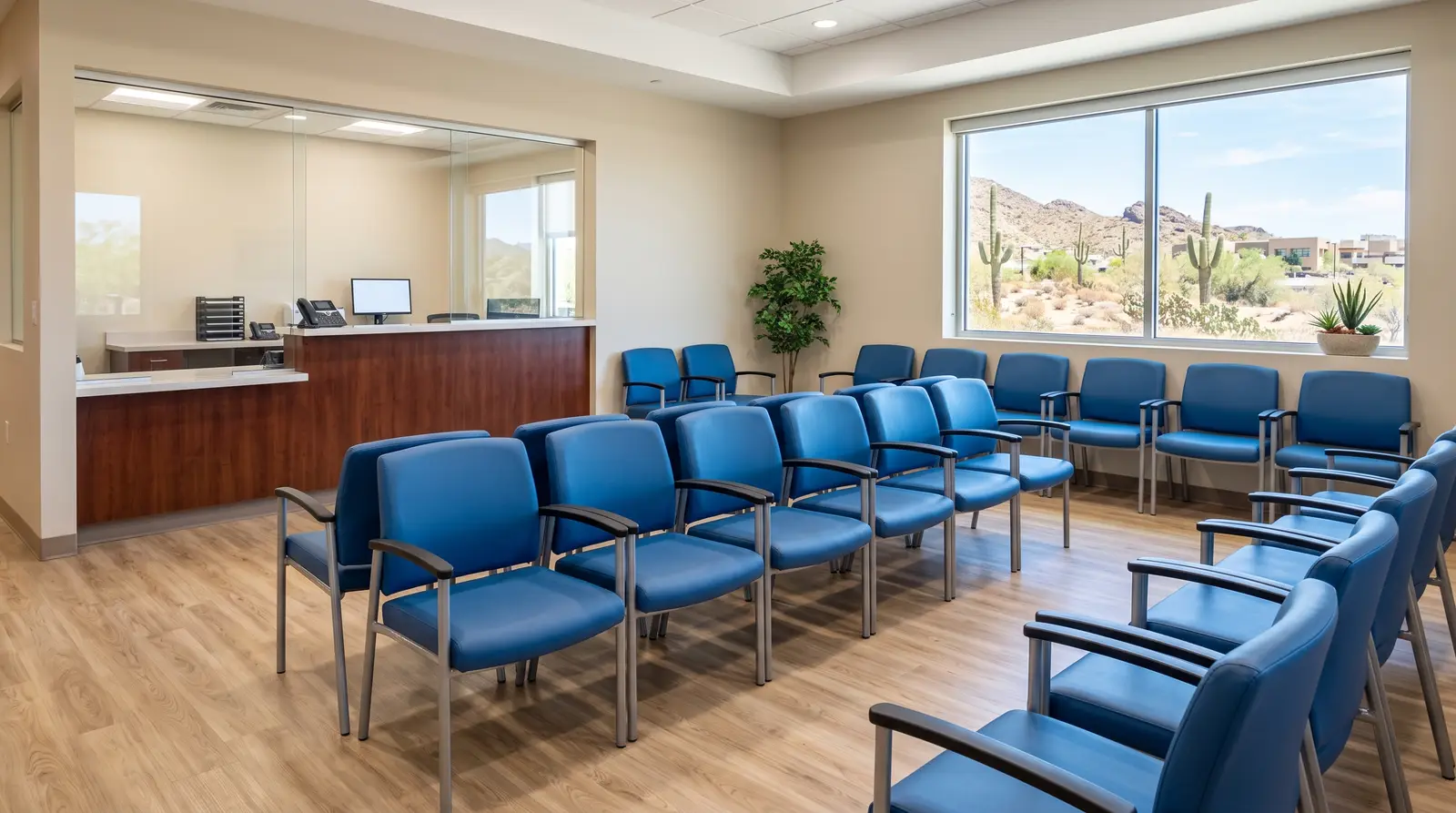
The waiting room is the first thing a patient judges, and in a Valley clinic it takes a beating. Chairs get wiped, arm rests included. Magazine tables, the check-in counter, the pen cup and the clipboard stack get wiped down. Glass at the entry and at the reception window gets cleaned inside and out. Floors get vacuumed or mopped and the mats get done. The water cooler, the kids' corner if there is one, and the hand sanitizer stands all get attention.
At the front desk, the crew wipes counters, phones and keyboards where the practice allows, pulls trash and shredder bins per your instruction, and leaves paperwork exactly where it was. Charts, screens and anything with a patient name on it are not ours to move.
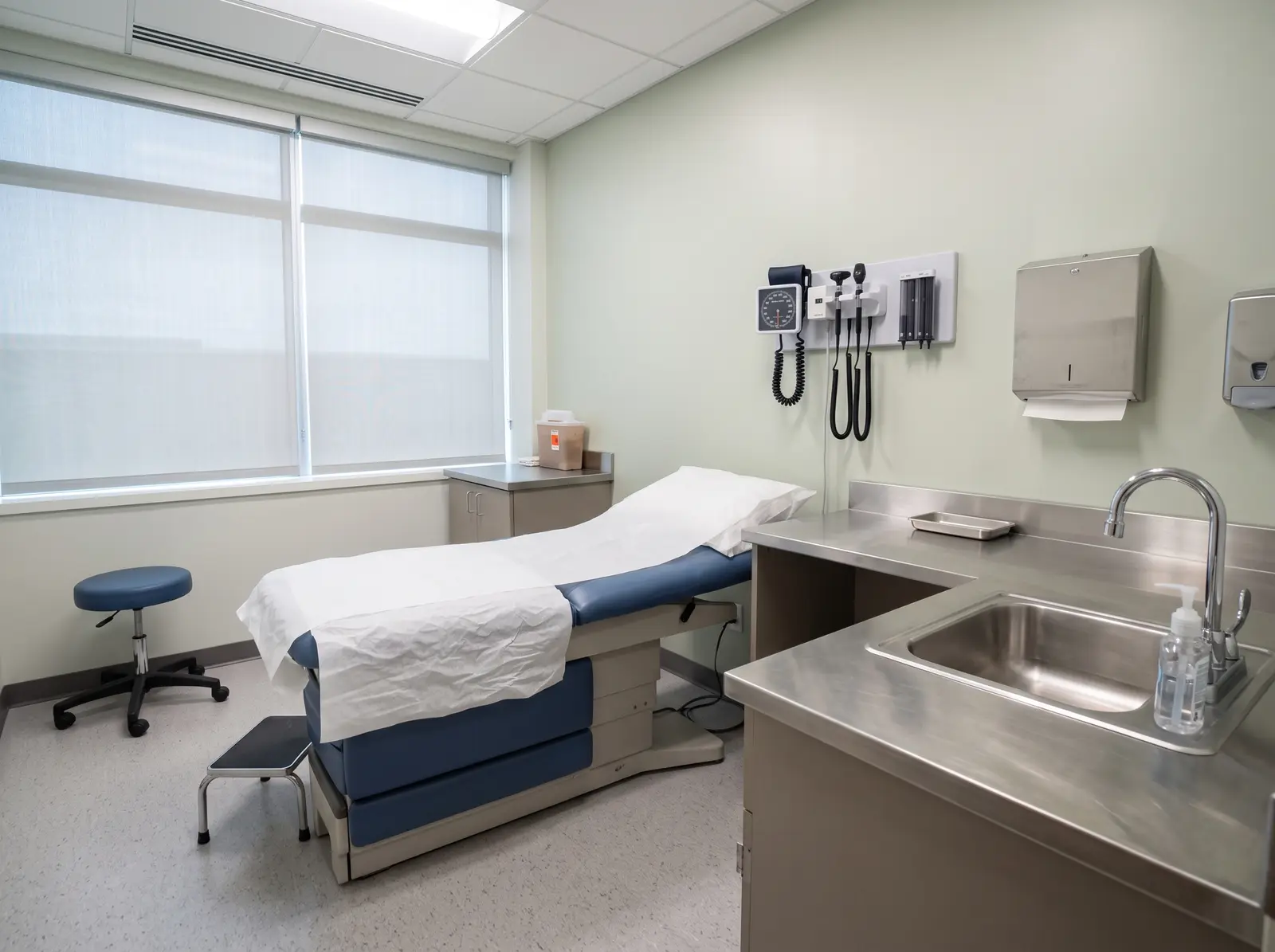
Exam rooms, where the practice directs us in, get the exam table wiped with the specified product, the counter and sink cleaned, the cabinet fronts and handles wiped, the stool and chair wiped, the floor mopped, and the trash pulled and relined. Wall-mounted equipment is left alone unless the protocol says otherwise.
Restrooms get the full treatment: toilets, sinks, mirrors, partitions and counters cleaned and sanitized, floors mopped, paper and soap restocked. Patient restrooms are checked at every visit because a patient will forgive a dusty ledge before a dirty restroom.
The staff break room, the manager's office, hallways, and the back entrance all get the standard office scope: dusting, wiping, vacuuming, mopping, trash and recycling out, high-touch points like door handles, light switches and rails wiped every visit.
Cleaning Schedules That Fit Around Patient Hours
Most practices want the crew in after the last patient and out before the first one, and that is the shape we build most often: an evening arrival after close, the full scope, alarm set and doors locked. For practices with early hours or Saturday clinics, the schedule bends around that.
Nightly service fits practices with a full waiting room and steady restroom traffic. Smaller practices, specialty offices with a lighter patient load, and satellite locations often do well on three nights a week or a single thorough weekly visit with restrooms and trash on a more frequent rotation. Where a practice wants restrooms and the waiting room kept up through a busy day, a day porter during business hours is an option, and that person works to the same protocols as the night crew.
All of this goes into the written scope with the days, the arrival window and the rooms. When the practice adds a provider or opens on a new day, the scope changes in writing.
What Practice Managers Fire Cleaning Companies For
The complaints that end a medical cleaning contract are the same ones that end an office contract, with higher stakes. A missed night in a clinic is a waiting room full of patients looking at yesterday's floor. A restroom that went unstocked is a patient complaint by ten in the morning. A crew nobody supervises starts skipping the exam room protocol because it takes longer. And a company whose phone goes to voicemail leaves the practice manager holding a problem alone.
Day Cleaning answers each one with behavior, not a brochure. You get a text or an email when the crew finishes each visit. Restrooms and the waiting room are first on the checklist, not last. The owner walks the accounts and the crew works to the checklist written from your protocols. And you have one point of contact, the owner, who takes the call and fixes the problem on the next visit or sooner.
Where the schedule allows, the same crew works your practice every visit. That matters more in a clinic than almost anywhere, because the crew that knows your protocols is the crew that follows them.
Dust, Pollen and Hard Water in a Valley Medical Office
Phoenix-area clinics fight the desert in ways a practice in a wetter climate never thinks about. Spring bloom brings pollen that settles on waiting room chairs and window sills, and patients with allergies notice it before anyone else does. Monsoon season, from mid June through the end of September, pushes fine dust through the door seals after every storm, and the waiting room floor and entry glass need an extra pass the night after a haboob.
Summer keeps the doors shut for months, and with highs over 100 degrees the air handler runs all day. Nothing gets aired out, so the dust on ledges, vents and the tops of cabinets builds faster than it looks like it should. Our dusting rotation in a medical office includes vents and high ledges for that reason.
Hard water across the East Valley leaves white scale on every sink in the building, and a clinic has a sink in nearly every room. Exam room sinks, restroom faucets and the break room all get scrubbed on a rotation so scale never becomes what a patient sees.
Snowbird season, October through April, fills waiting rooms in Scottsdale and the East Valley with winter visitors. Practices that see their volume climb in the fall often move from three nights to nightly for the season, and we plan for that shift ahead of time rather than after the first complaint.
Medical Office Cleaning Across the Phoenix Metro
Our base is in Mesa, so practices in Gilbert, Chandler, Tempe and Mesa are closest, and we work clinics across Scottsdale, Phoenix and the rest of the Valley. Practices in Gilbert and the southeast Valley are a short drive from our base on East Main Street. Dental practices have their own page, dental office cleaning, because operatories and sterilization areas have their own rules. Practices in a mixed professional building may want to read about office cleaning or janitorial services for the shared spaces, and a practice moving into a new build-out will want post-construction cleaning before the first patient walks in. Our full commercial list is on the commercial cleaning page, and the rest of what we do is on the home page.
We are licensed and insured, family-owned and operated, and use eco-friendly cleaning practices where the practice's protocols allow. We take calls seven days a week, day or night.
Frequently Asked Questions
Only where the practice directs us to and only under the practice's protocol. Many practices have us clean exam rooms with the disinfectant they specify and keep us out of procedure and sterile areas entirely. Whatever the practice decides goes into the written scope.
The practice's. You tell us which product goes on which surface and what dwell time it needs, and the crew uses it. We can restock from your supply or source the named product for you.
We do not claim any certification. What we offer is a crew that follows the practice's own written protocols exactly, a checklist built from them, and an owner who walks the account.
Yes. The schedule is built around your patient hours, whatever they are, and written into the scope with the arrival window.
We do not move charts, touch paperwork or handle anything with a patient's information on it. Counters and keyboards get wiped where the practice allows, and everything else stays where it was.