Commercial
Post-Construction Cleaning for Builders and Contractors Across the Valley
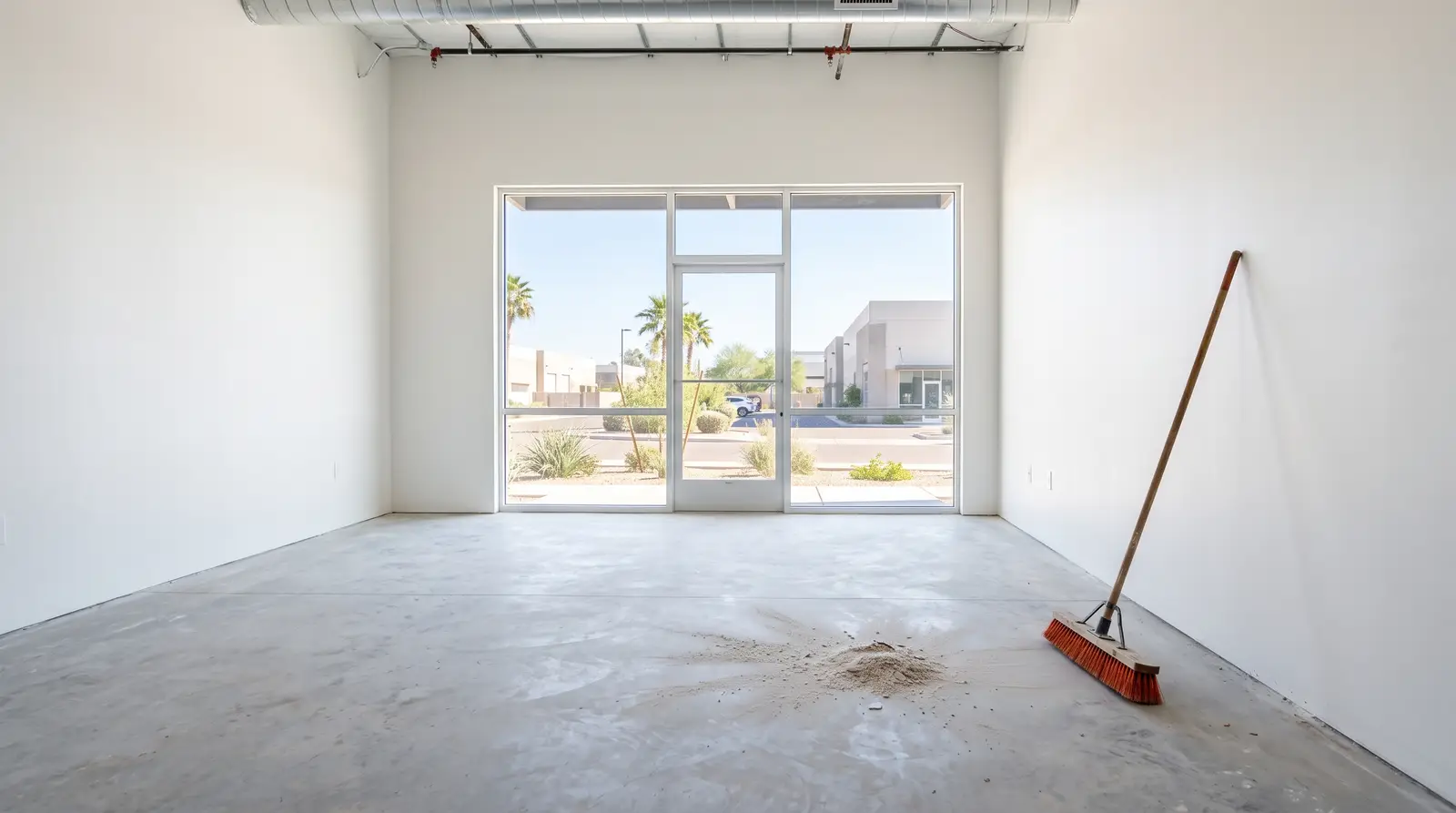
The trades are out, the dumpster is gone, and the space still looks like a job site. Drywall dust on every ledge, a haze on the windows, stickers on the glass and the appliances, grout film on the tile, sawdust inside the cabinets and a fine white layer on the inside of every light fixture.
Day Cleaning Solutions does the final clean that turns a finished build into a space the owner can walk through, for general contractors, builders, remodelers and property owners across the Phoenix metro.
We write this page for the superintendent, project manager or builder who has a walkthrough on the calendar and no time to argue with a cleaning vendor about what "clean" means. Our scope is the interior, top to bottom, and it is on paper before we start.
The Final Clean Before Your Walkthrough and Punch List
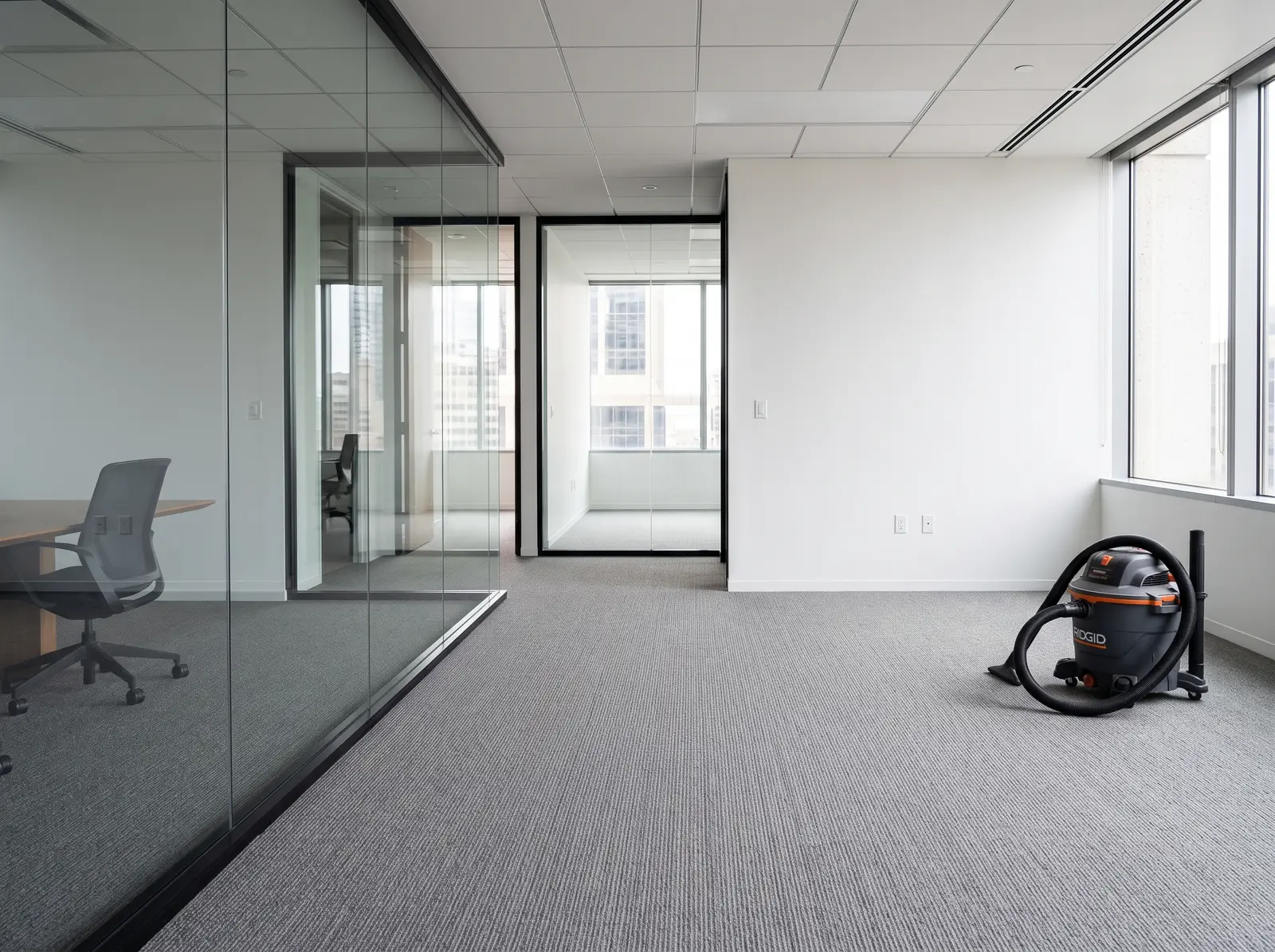
The final clean happens after the last trade leaves and before the owner, the tenant or the buyer sees the space. Its job is simple: make the finishes look like finishes. That means every surface the punch list will be judged against gets cleaned, and it means the cleaning crew does not create punch items of its own by scratching a countertop or streaking a window.
For a commercial tenant improvement, an office fit-out, a retail build or a new home, our final clean covers:
- All horizontal surfaces. Counters, sills, ledges, shelves, the tops of cabinets and door frames, the top of every duct and beam we can reach from a normal ladder.
- Floors. Vacuumed with a filter that holds fine dust, then mopped; tile and stone cleaned of grout haze where a normal cleaning product will lift it; carpet vacuumed once the dust is off the walls above it.
- Walls and doors. Dusted or wiped, with paint splatter and drywall smudges spot cleaned where the paint finish allows.
- Glass. Every window, door light and mirror inside the building, and the inside of every window track.
- Cabinets, drawers and closets. Inside and out, shelves wiped, hardware polished.
- Fixtures and appliances. Lights, fans, plumbing fixtures and appliances cleaned inside and out, protective film and labels removed where the manufacturer allows.
- Restrooms and kitchens. Fully cleaned and ready for first use.
We schedule the clean with your walkthrough in mind, and when you want a second pass after the punch list is closed and the final touch-ups are done, we build that into the quote.
Drywall Dust Gets Everywhere, So We Go Everywhere
Drywall dust is the reason a post-construction clean is a different job from a deep clean. It is fine enough to float, it settles on every surface including vertical ones, it gets inside closed cabinets and behind closed doors, and it keeps settling for days after the sanding stops. Wipe the counter once and it looks clean; come back an hour later and there is a new layer from the ceiling.
We work it from the top down, and we work it twice. High ledges, beams, duct runs, the tops of door frames and cabinets, ceiling fans and light fixtures get done first so the dust has already fallen by the time the floors are touched. Walls get dusted, then wiped where the finish allows. Every cabinet door, every drawer, every closet shelf is opened and cleaned inside. Return vents and registers get wiped, since that is where the dust concentrates. Floors are vacuumed, then mopped, then checked in the low light of the afternoon, which is when dust shows.
In the Valley, drywall dust gets company. The site sits in the desert, the exterior doors have been open for months, and the fine tan dust from the lot and the road mixes with the white dust from the finishing. Both come out the same way: slowly, from the top, with the right filtration and a lot of clean rags.
Inside Cabinets, Window Tracks and Sticker Residue: The Construction Details
Anyone can wipe a counter. The final clean gets judged on the details the owner finds on the walkthrough, and we have a list:
- Window tracks and door tracks. Vacuumed and wiped until the track is bare metal, not a channel of grit. Sliding patio doors get the same.
- Sticker and label residue. Manufacturer stickers on windows, appliances, plumbing fixtures, doors, cabinet interiors and HVAC registers removed, with the adhesive lifted using a product that will not mar the finish. Warranty labels and code stickers stay where the builder tells us they must.
- Protective film. Removed from appliances, glass, fixtures and countertops where the builder authorizes it.
- Inside cabinets and drawers. Sawdust, screws, packing foam and drywall dust cleared, shelves and drawer bottoms wiped, doors cleaned front and back.
- Grout haze and mortar smears. Lifted from tile and stone where a standard cleaning product will do it. Heavy haze that needs a specialty product is flagged, not hidden.
- Paint on glass and hardware. Spot removed carefully; we point out anything that needs the painter back.
- Light fixtures and fan blades. Cleaned inside and out, bulbs and covers wiped.
- Toilets, tubs, showers and sinks. Cleaned of construction debris and sealant film, fixtures polished.
- Doors, frames and baseboards. Wiped along their full length, including the top edge of every door.
Every one of those goes into the written scope so the superintendent knows what is included before the crew arrives.
Remodels and Tenant Improvements Versus New Builds
A new build is empty and every surface is fair game. A remodel or a tenant improvement is a different job: part of the building is occupied, the existing finishes have to be protected, and the dust has migrated into rooms that were never under construction. A kitchen remodel in a lived-in home leaves drywall dust on the living room bookshelves; an office suite renovation leaves it in the hallway and the neighboring tenant's entry.
For remodels we scope the construction area and the affected areas separately. The renovated rooms get the full final clean. The rooms around them get a dust-focused pass: high surfaces, furniture where the owner allows, floors, vents and glass. For a tenant improvement in a working building, we coordinate with the property manager on hours and access so the clean happens after the trades and outside the neighbors' business hours. A restaurant build, a retail store fit-out or a medical office build has its own finishing requirements, and we set the scope with the intended use of the space in mind.
What a Post-Construction Clean From Day Cleaning Includes, and What It Does Not
Being plain about the boundaries keeps a job on schedule. Included: the full interior, top to bottom, as written in the scope, with a second pass after punch-list work when you want one. Included: removal of the light debris a cleaning crew normally handles, meaning the packing material, stickers, sawdust and dust that a broom and a vacuum can deal with, bagged and placed where you direct on site.
Not included: construction debris removal. Lumber offcuts, drywall scraps, pallets, buckets and anything that belongs in the dumpster stay with the general contractor. Not included: exterior work. We do not wash the outside of the building, the windows above the first floor from outside, the driveway, the patio or the yard. Not included: floor finishing, sealing or anything else a flooring contractor does. When a surface needs a specialty product or a trade to come back, we tell the superintendent rather than improvising on someone else's finish.
We are licensed and insured and family-owned and operated. The owner quotes every post-construction job after seeing the space or the plans, writes the scope, and is the one person the project manager calls.
Scheduling a Clean Around a Build Timeline
Construction schedules move, and a cleaning vendor who cannot move with them is a liability. We set the clean against the milestone rather than a fixed date: after final paint, after the flooring crew, after the punch walk, before the owner's walkthrough, before the certificate of occupancy inspection, before the photographer, before the tenant's furniture arrives. When the milestone slips, the clean slips with it, and we ask only for a call when the date firms up.
Where the schedule allows, the same crew that did the rough clean does the final, so they know the building. We can take a rough clean at drywall finish, a final clean before the walkthrough and a touch-up after the punch list, or just the final. Calls and bookings are answered seven days a week, day or night, because build schedules do not respect weekends either.
We work new-home and commercial builds from the East Valley to the West Valley, including the subdivisions and new commercial pads going up in Queen Creek and Buckeye. Once a building is open, the same crew can carry it into a recurring agreement: office cleaning for the finished suite, or common area cleaning for a new apartment community's clubhouse and leasing office. The commercial cleaning page lists every building type, and the home page covers the residential side, including move-in cleans for the buyer of a brand new home.
Frequently Asked Questions
No. Lumber, drywall scraps, pallets and anything that belongs in the dumpster stay with the general contractor. We handle the light material a cleaning crew normally deals with, bagged and placed where you direct on site.
No. Our post-construction scope is the interior, top to bottom. Exterior washing, upper-floor exterior windows, driveways and patios are outside it.
Yes. Many builders schedule a rough clean after drywall finish, a final before the walkthrough and a touch-up after the punch list is closed. Each stage is written into the scope.
The clean moves with the milestone. Call when the date firms up and we reschedule; nothing is lost.
Manufacturer stickers and protective film are removed where the builder authorizes it, with the adhesive lifted using a product that will not mar the finish. Warranty and code labels the builder needs stay in place.